Communication cables play a vital role in keeping today's critical systems reliable and connected. From industrial automation to emergency communication, these cables ensure high-speed data transmission, redundancy, and durability in all environments. They're built to maintain uptime even when exposed to extreme temperatures, vibration, or interference. Whether in mines, tunnels, offshore rigs, or clean room facilities, communication cables safeguard operational efficiency and worker safety. Learn how different types of industrial cables support mission-critical operations through advanced materials, robust shielding, and smart network design. This article explores the essential types of cables, their durability standards, and the innovations driving reliable communication in modern industries.

Types of Communication Cables
Communication cables form the backbone of every industrial network. Depending on application requirements, they come in several types—fiber optic cables, coaxial cables, and twisted pair cables being the most common.
-
Fiber optic cables transmit data at nearly the speed of light using pulses of light through thin glass fibers. They are ideal for long-distance, high-speed communication where electromagnetic interference (EMI) must be minimized.
-
Coaxial cables are widely used in industrial and broadcast systems. Their layered design ensures signal stability and durability in electrically noisy environments.
-
Twisted pair cables, such as Cat6 or Cat7 Ethernet cables, are cost-effective and reliable for short-range communication within control rooms or factory floors.
Each cable type is chosen based on signal speed, data volume, distance, and environmental exposure.
Cable Durability Standards
Durability determines whether a cable can survive harsh conditions and still perform flawlessly. Communication cables in industrial environments must comply with international standards such as IEC 60332 (flame retardant), IEC 60754 (low smoke, halogen-free), and IEC 61034 (smoke density).
To resist extreme temperatures, cables often include thermoplastic elastomer (TPE) or polyurethane (PUR) jackets. Shielding materials such as tinned copper braid or aluminum foil protect against EMI and mechanical stress.
Redundancy is equally important. In critical systems, multiple cables are installed in physically separate pathways. If one cable is damaged, data automatically reroutes through a backup path. This design—commonly used in mine network essentials and railway control systems—ensures continuous uptime and safety under any condition.
Use Across Industries
Communication cables are indispensable across industries that demand reliable, real-time connectivity.
-
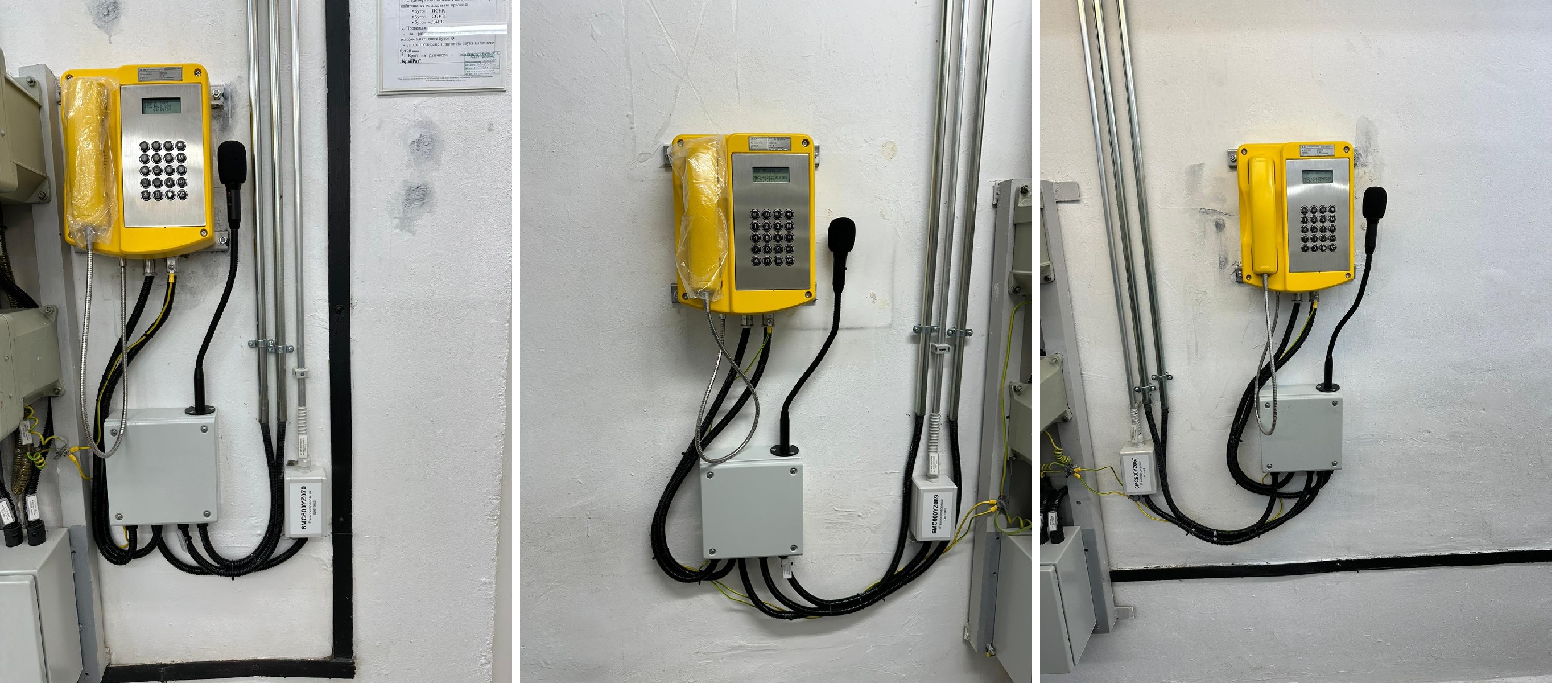
Mining and Tunneling: In mines and underground environments, rugged fiber or hybrid cables connect phones, sensors, and monitoring systems, ensuring instant communication for safety and operations.
-
Oil and Gas: Offshore and onshore facilities use armoured, flameproof cables that can withstand oil exposure, mechanical stress, and corrosion.
-
Manufacturing: Smart factories rely on Ethernet and fiber networks to link robots, PLCs, and control panels for efficient automation.
-
Healthcare and Clean Rooms: In controlled environments, cables used in clean room intercom systems must resist contamination and support crystal-clear communication while maintaining hygienic standards.
-
Transportation and Infrastructure: Railways, airports, and tunnels deploy fiber networks to integrate emergency phones, PA systems, and surveillance equipment.
No matter the industry, communication cables remain the invisible force ensuring system continuity.
Challenges in Harsh Zones
Environments such as deserts, offshore platforms, or deep tunnels expose communication cables to multiple stress factors—heat, humidity, vibration, and even rodents. These conditions accelerate cable degradation and signal loss.
Mechanical protection is key. Steel-wire armoured (SWA) cables and UV-resistant sheaths extend service life. In oil refineries or chemical plants, flameproof and halogen-free designs prevent toxic gas emission in case of fire.
Signal integrity must also be maintained. Without proper shielding or grounding, EMI can cause data errors, delayed response, or complete network failure. That's why cable selection and routing are crucial parts of system design.
Innovations in Industrial Cabling
The future of communication cables lies in smart, adaptive, and sustainable designs. New-generation industrial cables integrate self-diagnostic features, allowing maintenance teams to monitor performance and detect faults in real time.
Hybrid cables—carrying both power and data—simplify installations and reduce downtime. In hazardous zones, fiber-to-the-edge (FTTE) and distributed sensing technologies enable operators to detect temperature or vibration changes along the cable path itself.
Manufacturers are also investing in eco-friendly materials that comply with RoHS and REACH standards, reducing environmental impact without compromising reliability.
As industries move toward Industry 4.0 and IoT-based systems, robust communication cables will remain the foundation of safe, intelligent, and connected operations.


 Prisons & Correctional Facilities
 Transportation & Underground Infrastructure
 Critical Industrial & Energy Facilities
 Marine & Offshore
 Manufacturing Plant & Public Facilities