VoIP vs Analog Explained
For decades, analog phone systems served as the backbone of industrial and business communication. They relied on copper wires and circuit-switched networks to transmit voice signals. While analog systems are simple and dependable, they have reached their technological limits in today's digital world.
VoIP (Voice over Internet Protocol) represents a new era of communication, transmitting voice data over the internet instead of through traditional phone lines. This approach not only reduces cost but also enables powerful, flexible features that analog systems simply can't match.
When comparing the benefits of VoIP vs analog, it becomes clear that VoIP provides greater performance, scalability, and cost-efficiency—making it the preferred choice for modern industrial environments that require dependable and adaptive communication systems.
Communication Quality
Voice clarity and reliability are essential, especially in mission-critical sectors like mining network systems and clean room voice quality applications.
Analog lines can experience signal degradation due to distance, wiring issues, or electromagnetic interference. In contrast, VoIP systems deliver digital-quality audio that remains clear and consistent regardless of distance. With technologies such as noise cancellation and high-definition codecs, VoIP ensures superior voice performance even in noisy environments.
For industries operating in challenging conditions—whether deep underground, offshore, or inside a high-tech facility—our VoIP solutions guarantee clear, uninterrupted communication. The system’s data-driven transmission eliminates static, echo, and distortion commonly found in analog lines.
Moreover, VoIP integrates seamlessly with other communication tools, including video conferencing and instant messaging, allowing teams to collaborate efficiently across sites or continents.
Cost Efficiency
One of the most significant advantages when analyzing the benefits of VoIP vs analog is cost.
Analog phone systems often involve high initial setup expenses, including cabling, hardware, and ongoing maintenance. Each new extension or location requires physical wiring and installation by on-site technicians, adding to operational costs. Furthermore, long-distance and international calls over analog networks can be considerably more expensive.
VoIP eliminates many of these costs. Because it uses the internet, call rates—especially international ones—are significantly lower. Many VoIP providers also offer flat-rate pricing or bundled plans, simplifying cost management.
In addition, maintenance costs are reduced since system updates, security patches, and troubleshooting can be handled remotely by the provider. Businesses no longer need to allocate budget for expensive on-site service visits.
Over time, the financial difference between VoIP and analog grows substantially, with VoIP offering a faster return on investment and lower total cost of ownership.
Dubai Oil Rig Project
Scalability
As businesses grow, their communication systems must grow with them. Analog systems make this difficult because they depend on physical phone lines. Adding new lines requires wiring, hardware expansion, and technician time—all of which increase complexity and cost.
VoIP systems, on the other hand, are built for scalability. Adding or removing users is as simple as changing a software setting or connecting a new device. Whether your company is opening a new facility, expanding its workforce, or upgrading an existing site, VoIP adapts effortlessly to your changing needs.
This scalability also extends to mobility. Since VoIP operates through the internet, users can make and receive calls from any location with a secure connection—ideal for remote work or multi-site operations.
For industries with multiple remote locations, such as mining or transportation, this flexibility ensures continuous connectivity and operational efficiency across the entire network.
Maintenance Considerations
Maintenance is another crucial factor in evaluating the benefits of VoIP vs analog systems.
Analog infrastructure requires physical maintenance, often involving technicians traveling to the site for repairs or upgrades. This can be time-consuming and costly, especially for large facilities or remote sites.
VoIP systems, by contrast, are typically cloud-managed. Service providers handle updates, security, and performance monitoring remotely. Businesses benefit from reduced downtime and fewer disruptions to daily operations.
Furthermore, VoIP's cloud-based structure allows automatic software updates, ensuring the system always operates with the latest features and security protocols. This approach minimizes human error and maximizes reliability.
By outsourcing maintenance to the provider, companies can focus on core operations instead of managing phone system logistics.
Conclusion
The debate between analog and VoIP systems ultimately comes down to performance, flexibility, and long-term value. While analog technology once served as a reliable foundation for communication, it cannot compete with the efficiency and innovation that VoIP delivers today.
From cost savings and high-definition voice quality to scalability and minimal maintenance, the benefits of VoIP vs analog are clear. As industries move toward digital transformation, adopting VoIP is not just a smart upgrade—it's a strategic investment in future-ready communication.
J&R Technology continues to provide reliable, industrial-grade VoIP solutions designed for challenging environments—from clean rooms to mining networks. Explore how our systems enhance clarity, connectivity, and efficiency for your operations.


 Prisons & Correctional Facilities
 Transportation & Underground Infrastructure
 Critical Industrial & Energy Facilities
 Marine & Offshore
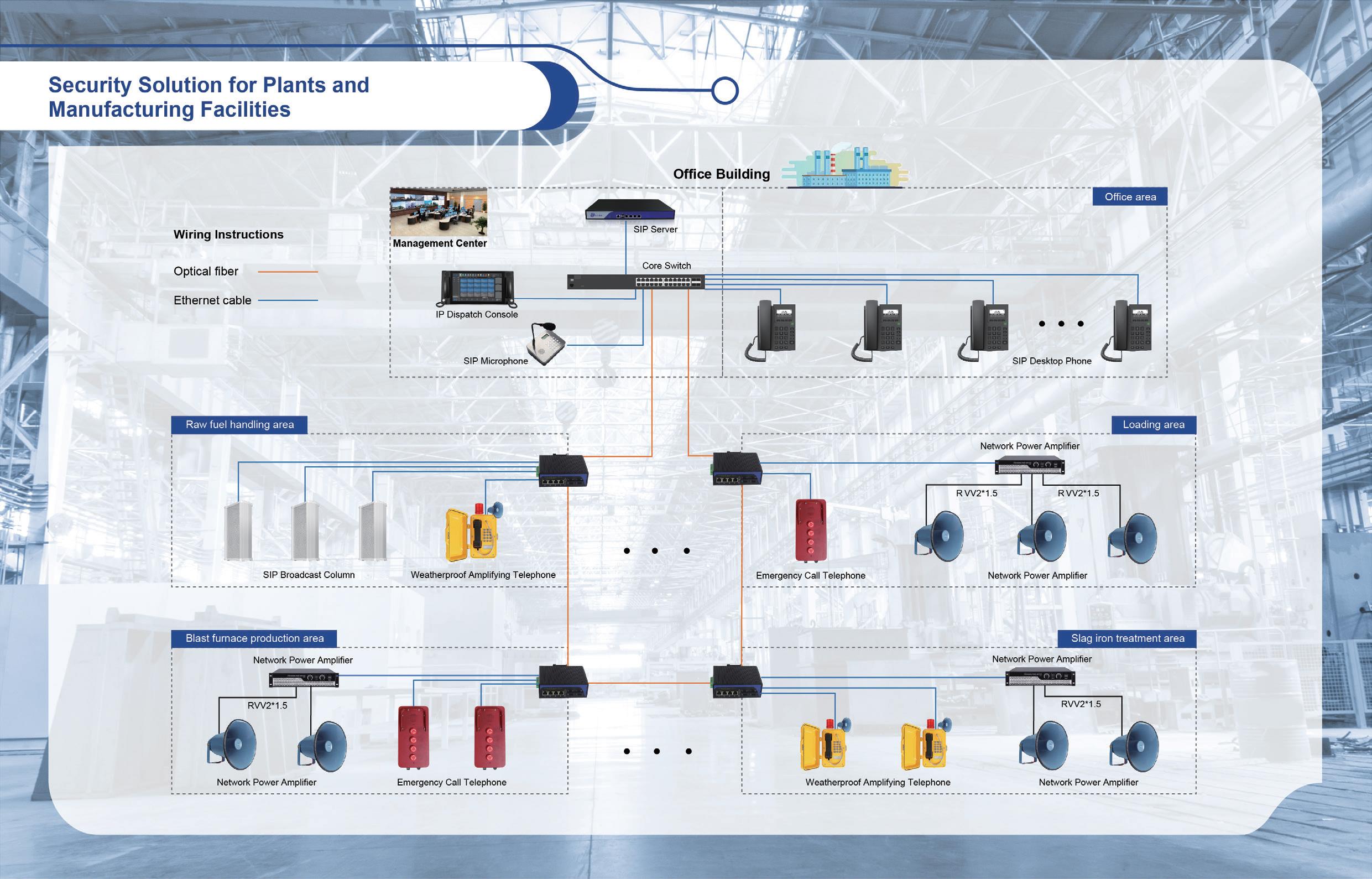
 Manufacturing Plant & Public Facilities